Jul 17, 2026
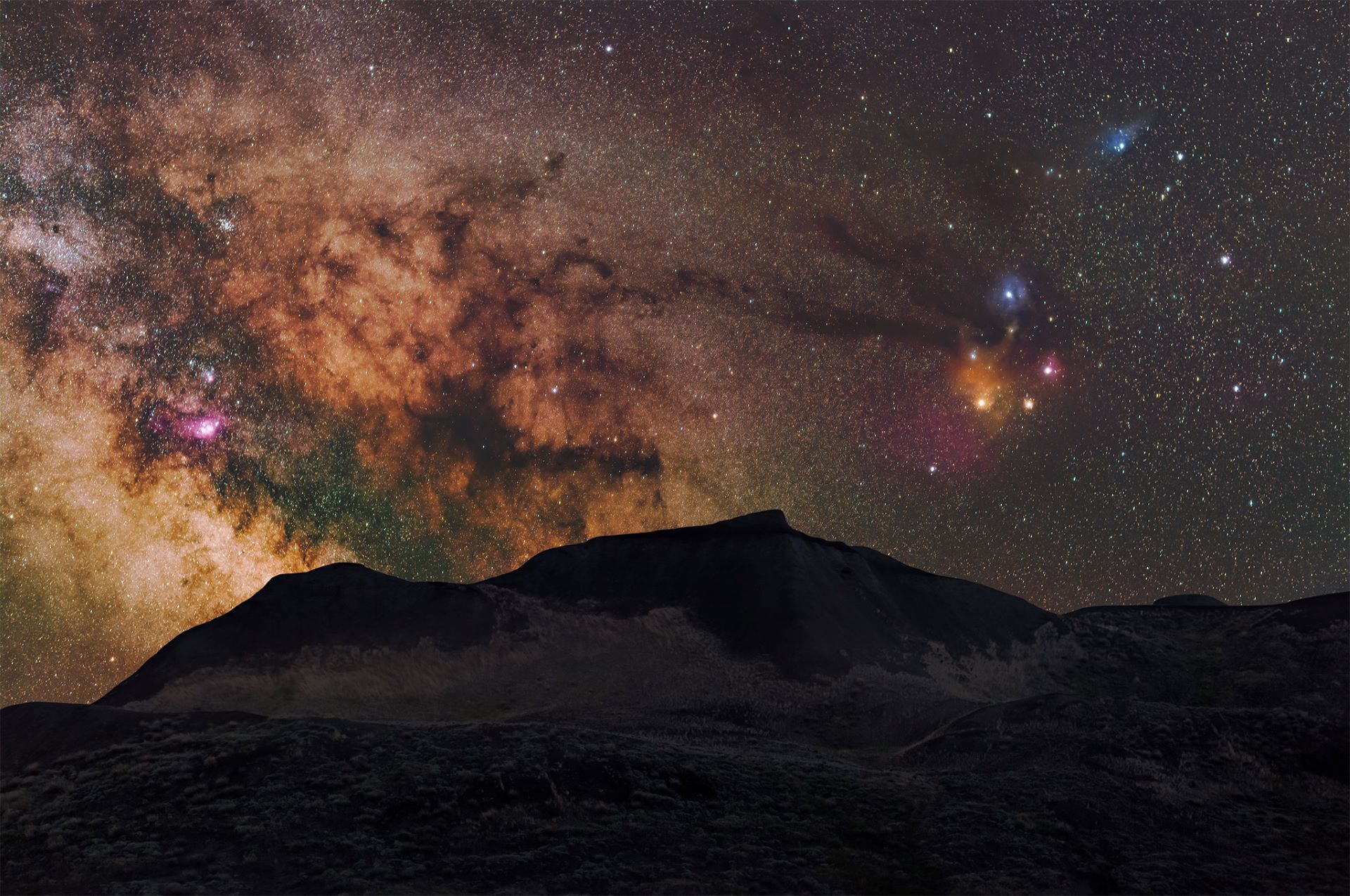
Grasslands National Park is one of Canada’s largest and darkest official Dark Sky Preserves. With virtually zero artificial light pollution, the entire park offers a pristine, Class 1 canvas for night photography.
The park is divided into two distinct regions: the East Block and the West Block. While the remote East Block is centred around the breathtaking prehistoric Rock Creek Badlands, there are almost no services on this side of the park; it’s a true paradise for the adventurous photographer. The West Block offers a highly accessible alternative. Instead of intimidating backcountry hikes, the premier shooting locations in the West Block are reached via short walks or sit right beside the road.
The West Block also offers the convenience of comfortable accommodations in and around the small town of Val Marie on the park's northern edge. You don’t even need to leave your lodging to get great results. Years ago, I stayed at The Crossing in Grasslands, set up my camera and star tracker in the backyard, and captured stunning deep-sky images with my air-conditioned bedroom only a dozen feet away.
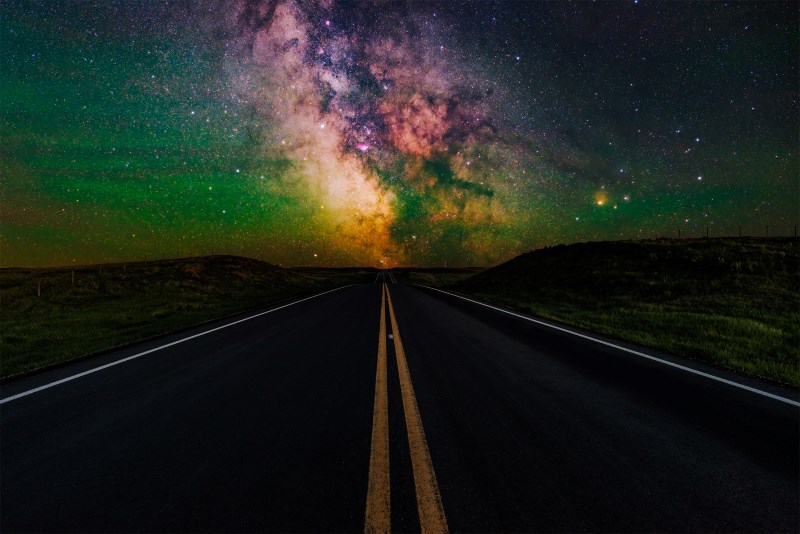
Most astrophotographers target the Milky Way during the summer months to capture the bright galactic core. However, short summer nights in Canada create a unique challenge. True darkness, known as astronomical darkness, only occurs when the sun dips at least 18 degrees below the horizon.
Because of the Earth's tilt, the further north you travel in summer, the shorter this window becomes. In Saskatoon, for example, true astronomical darkness completely disappears for about 65 days between mid-May and late July.
This is where Grasslands National Park has a massive advantage. Hugging the United States border, it is the southernmost photographic location in Saskatchewan. Down here, the twilight-only window shrinks to just three weeks. Even on the summer solstice, the sun still dips to 16 degrees below the horizon. While technically still inside astronomical twilight, practically speaking, the southern sky remains incredibly dark. You can pull massive amounts of clean, high-contrast detail out of the Milky Way core here all summer long without dealing with a muddy, twilight-exposed sky.
While the entire West Block sits under a pristine sky, finding specific foreground elements that match the majesty of the stars is the key to creating a compelling image.
Before you venture out, remember that Grasslands is home to the Prairie Rattlesnake, which often seeks the daytime warmth of rocks and trails after dark. Stay "snake aware" by wearing protective gaiters or high boots, using a good flashlight to check the ground before setting down your tripod, and scouting your locations during daylight hours. With a bit of preparation, you can easily share the night with the local wildlife at these three premier locations.
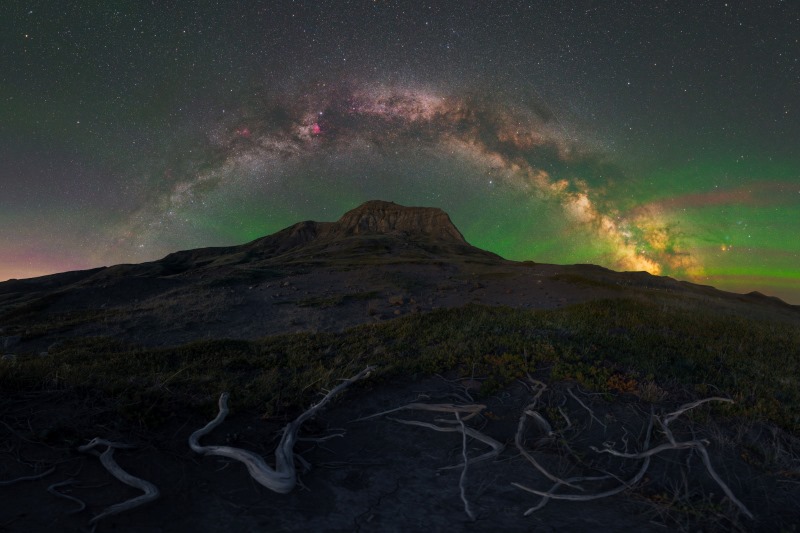
The flagship hike in the West Block is 70 Mile Butte, the highest geographical point in the park. While the full hike up the butte is rated as difficult, astrophotographers should focus on its neighbour, Eagle Butte, which is visible the moment you park at the main trailhead.
Take an immediate right turn at the start of the trail and head south toward 70 Mile Butte. Just a few hundred metres in, at the crest of the first small hill, you will get a perfect view of Eagle Butte looking directly east. This is the ultimate vantage point for capturing a massive, sweeping panorama of the Milky Way arching over the butte during the peak spring core season. If you turn left instead of right at the trailhead, you can navigate around the backside of Eagle Butte. This angle offers deep drainage channels and foreground textures that make exceptional leading lines straight to the butte in the background.
While much of Grasslands National Park is characterized by badlands and grasslands, the Frenchman River Valley feels like an entirely different ecosystem. Starting from the Two Trees Day Use Area, the Riverwalk Trail guides you directly along the winding shoreline of the Frenchman River.
Because the river winds through the valley floor, you can utilize the river’s curves as a leading line to guide the viewer's eye into a star-filled sky. The valley is also home to some of the few trees in the park. Finding a solitary cottonwood or willow along the path allows you to shoot wide, using the dark silhouette of the branches to establish an immense sense of scale against the brilliant backdrop of the Milky Way.
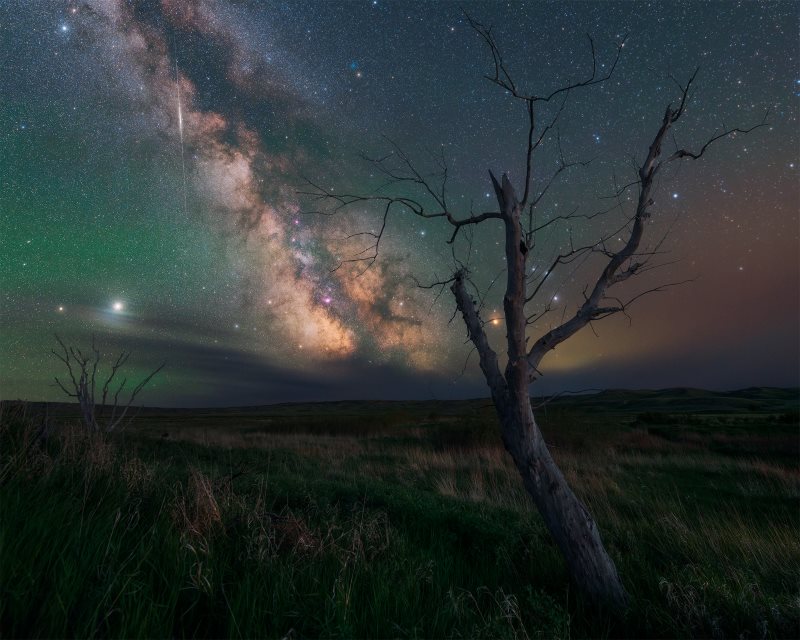
While it is historically named Two Trees, there is really only one iconic tree left standing at this specific location near the day-use area. While it photographs beautifully with a traditional wide-angle lens, its unique positioning makes it one of the absolute best spots in the province for deepscape astrophotography. If you’re unsure about this technique, you can read a guide on Deepscape photography here.
Because this lone tree sits prominently at the crest of a significant hill, you can back your camera up, swap to a longer focal length, and compress the perspective. Positioning the silhouette of this single, isolated tree directly in front of a massive, detailed galactic core creates an image of immense scale. It beautifully depicts the true vastness of the universe and our quiet place within it.
While the East Block is famous for its rugged wild spaces, the West Block offers an equally incredible, straightforward wilderness experience. Parks Canada makes backcountry camping remarkably easy: simply register at the Visitor Centre in Val Marie, choose your preferred backcountry zone, and head out to pitch your tent anywhere that is at least one kilometre away from roads and trails. Leave No Trace principles strictly apply here.
The ultimate backcountry target in the West Block is the Three Sisters. The official Parks Canada trail only guides you to a distant viewpoint, so to reach the actual formations, you need to hike a few kilometres further. This route navigates past a lively black-tailed prairie dog colony, through a deep valley, and across breathtaking wildflower meadows.
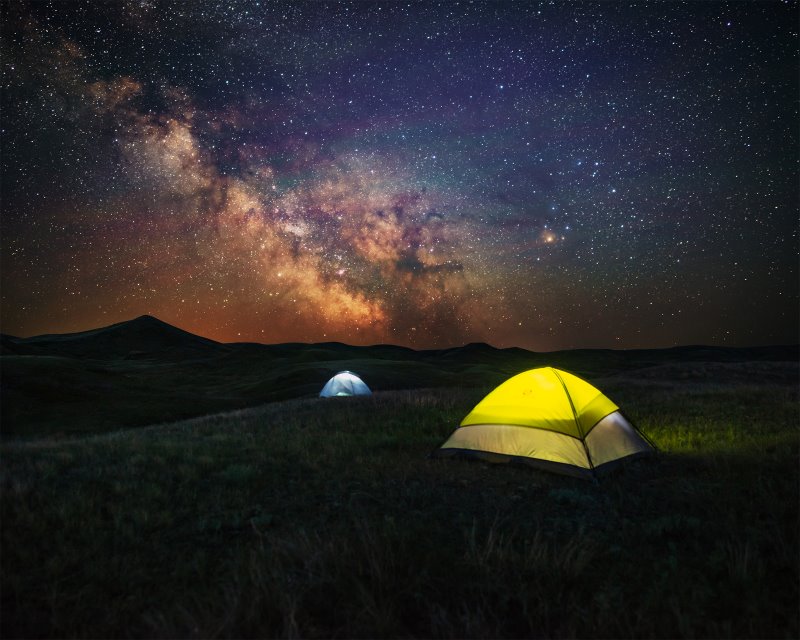
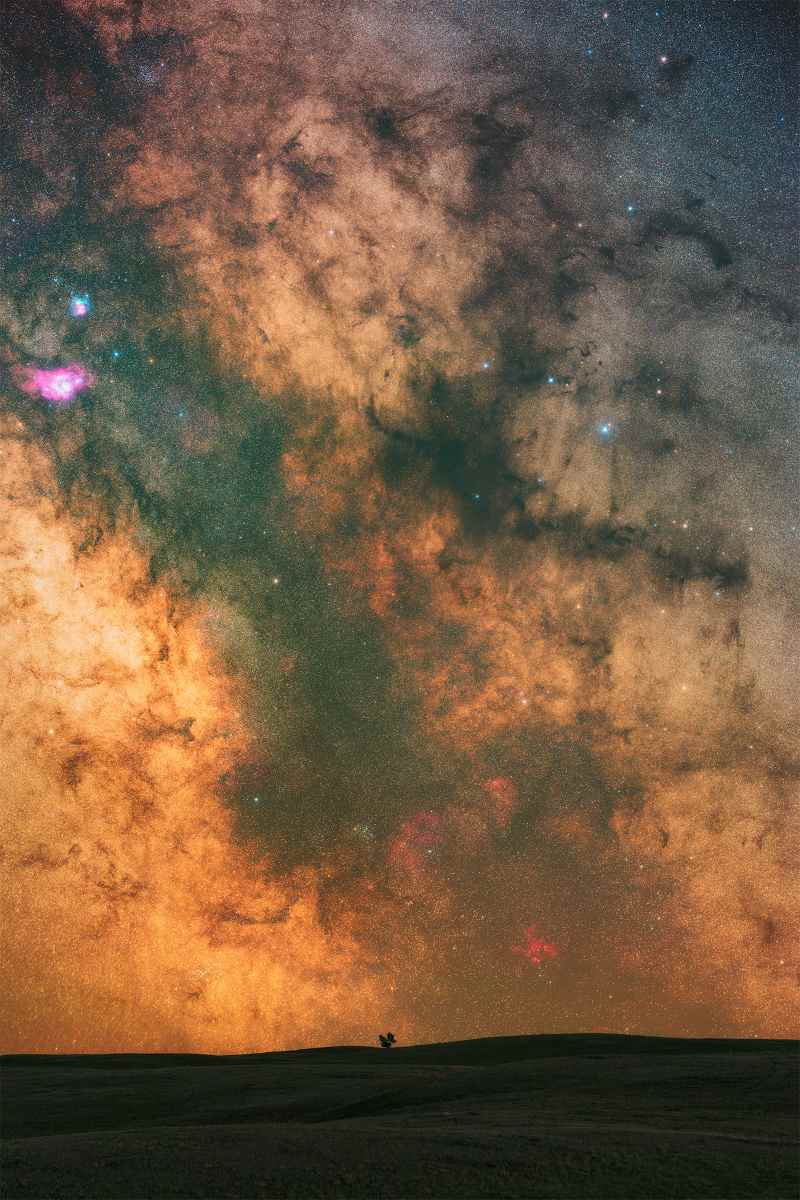
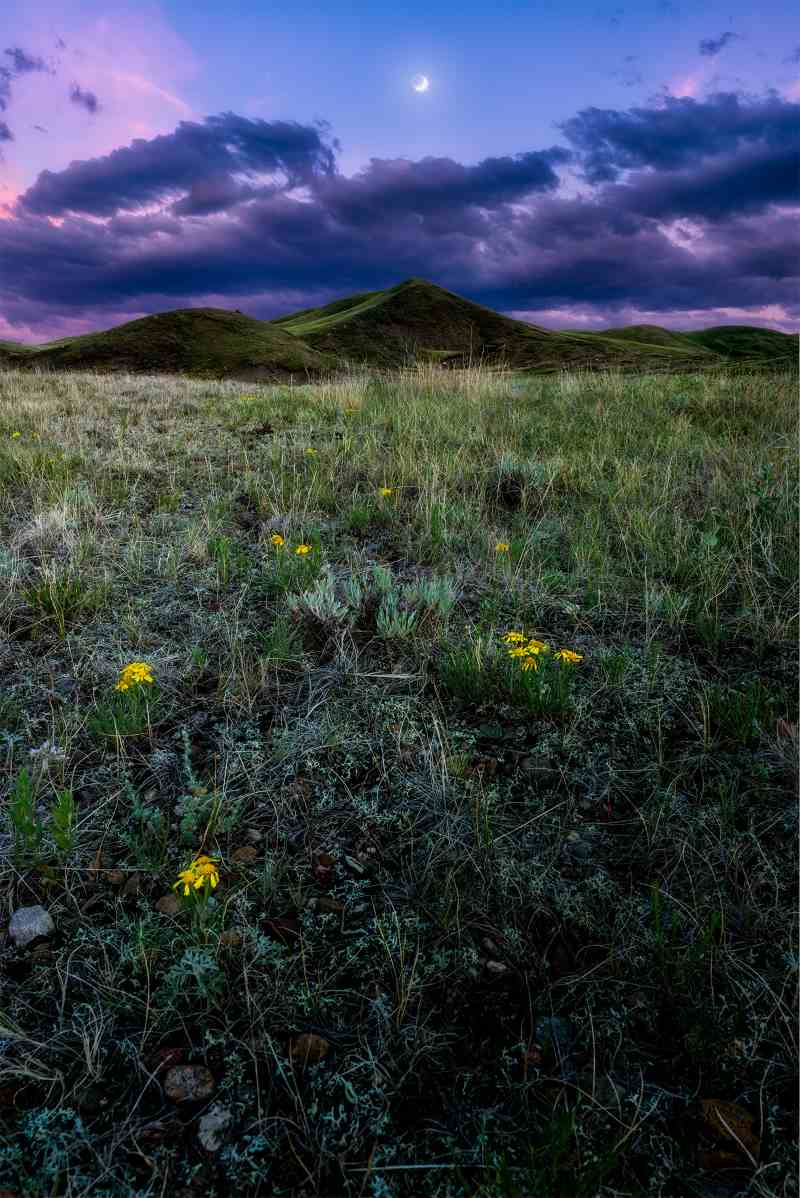
A few years ago, a friend and I ventured into this exact zone for a night of shooting, and the results were spectacular. In the course of a single night, we captured our tents glowing on the valley floor with the Milky Way arching overhead, framed delicate prairie wildflowers during the blue hour, and composed a striking portrait of the Three Sisters aligned perfectly with the vibrant galactic center.
If you’ve never experienced the night sky in a true Dark Sky Preserve, it deserves a spot on your bucket list. Remember to step away from your camera viewfinder for a moment and just take in the experience.
The West Block truly offers something for everyone, from the "pyjama photographer" shooting right from their vehicle or lodging to the adventurous soul packing into the backcountry. As you explore, please protect this fragile ecosystem. Keep your headlamp on red-light mode to preserve your night vision, and scout your locations during the day so you can navigate safely after dark. Most importantly, practice strict Leave No Trace principles by sticking to durable surfaces. Navigating native prairie in pitch darkness can easily crush delicate wildflowers, killing the plants and preventing them from reseeding.
Ready to experience the Land of Living Skies after dark? You can book your trip and find local accommodation resources by visiting Tourism Saskatchewan’s Grasslands National Park Information Page.
 Scott Aspinall is a Saskatchewan-based landscape photographer specializing in severe weather and deep-sky astrophotography.
Known for capturing the raw, dramatic beauty of the Canadian Prairies, Scott helps travellers experience the "Land of Living Skies" through his technical guides, field workshops, and fine art photography at Scott Aspinall Photography.
Tags


