Oct 19, 2026
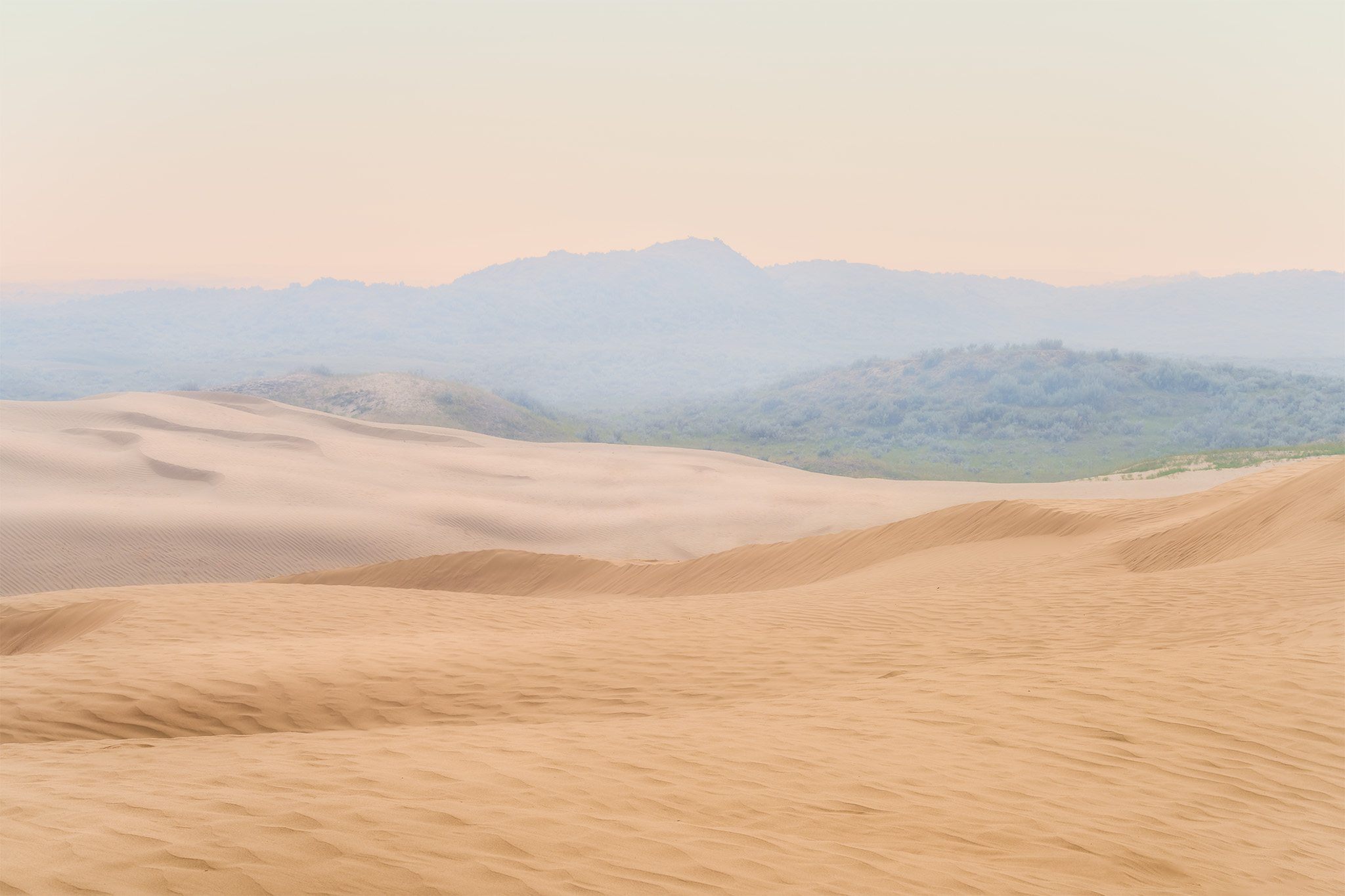
Spanning 1,900 square kilometres, the Great Sandhills are the second-largest active sand dunes in Canada, sitting just behind Saskatchewan’s legendary Athabasca Sand Dunes. But while the Athabasca wilderness requires a floatplane or canoe to reach, the Great Sandhills offer a drive-in alternative where you can park right at the base of a massive, active dune. Most summer visitors make the trek to slide down the sand on crazy carpets or spot local wildlife. I go for a different reason: the Great Sandhills are one of the premier landscape photography locations in Western Canada.
Spanning 1,900 square kilometres, this landscape will make you wonder why anyone bothers travelling all the way to Death Valley. While the Great Sandhills cover a significant part of the Saskatchewan map, much of the area has been stabilized by vegetation, including prairie grasses, sagebrush, and small clusters of aspens and willows. Approximately 1% of this area is exposed, active, and migrating sand dunes.
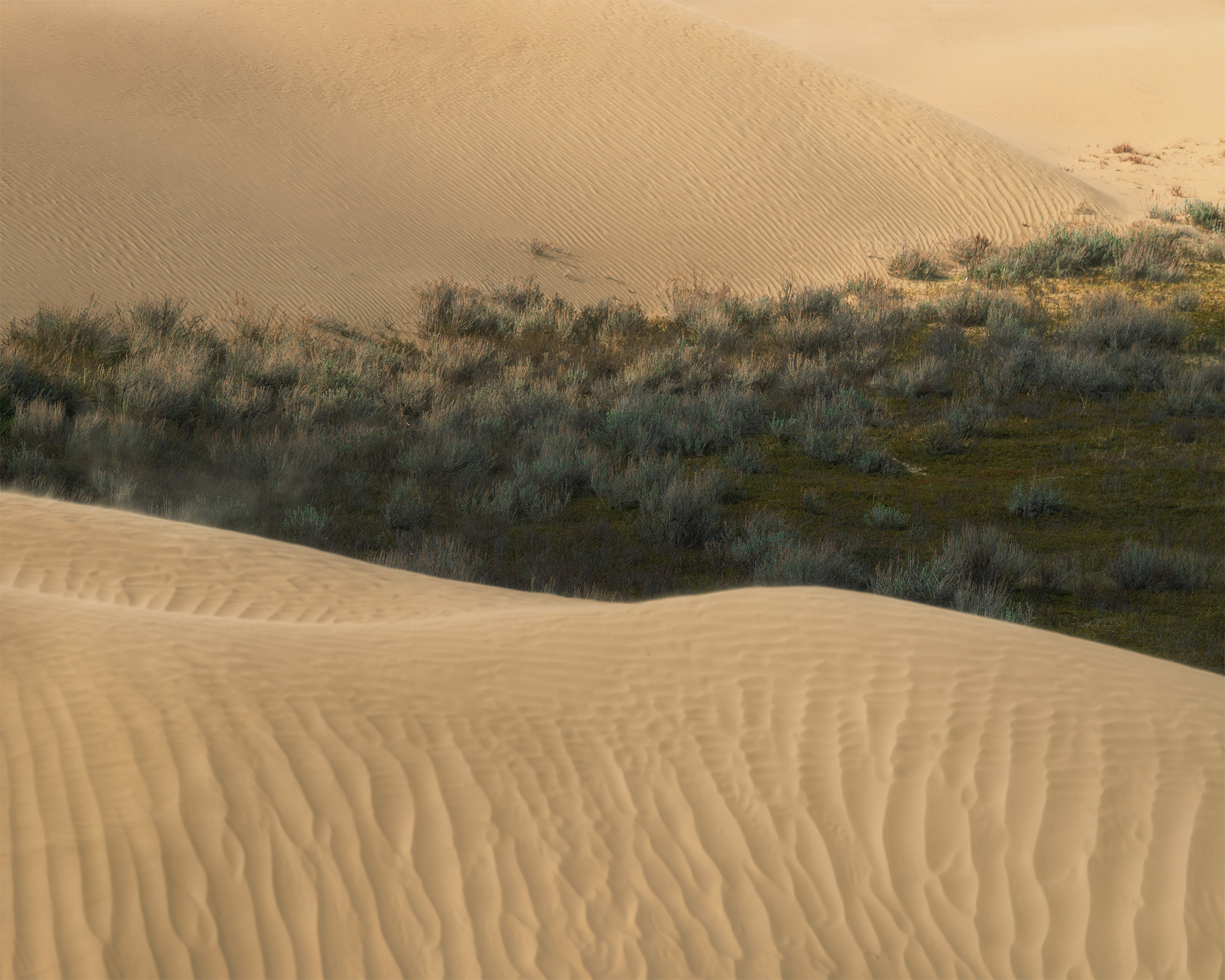
As you drive over the Texas gate into the ecological area from Sceptre, you’ll first notice that the road you approach the dunes on turns from gravel to sand - a route that can become treacherous and nearly impassable when there’s been heavy rains. The rolling, brush-covered dunes make you feel as if you’ve driven straight into an old Western flick—rustic, untouched, and frozen in a different time.
A few minutes after entering the ecological area, you’ll come around a bend and see it, a towering sand dune glimmering in the afternoon sun. There’s a parking area right at the base of that dune where you can get out and take a quick walk to this popular dune.
Note that the final approach to the dunes traverses private land and requires adherence to specific guidelines: no fires or camping, and parking only in designated areas. Please remember to respect the environment; take only pictures, leave only footprints.
If you hike to the crest of this first dune, however, you will spot a second, completely separate set of active dunes further to the southwest. As a photographer, this is your true target. It requires a bit more hiking to reach, but these dunes are vastly larger, more dramatic and almost completely free of the footprints that often litter the first dune, leaving the sand in pristine condition for photography.
While this second set of dunes is the most photogenic of the bunch, a third set a little farther south offers a nice scene that makes the additional few kilometres of hiking worthwhile. I’m talking, of course, about the cottonwood tree.
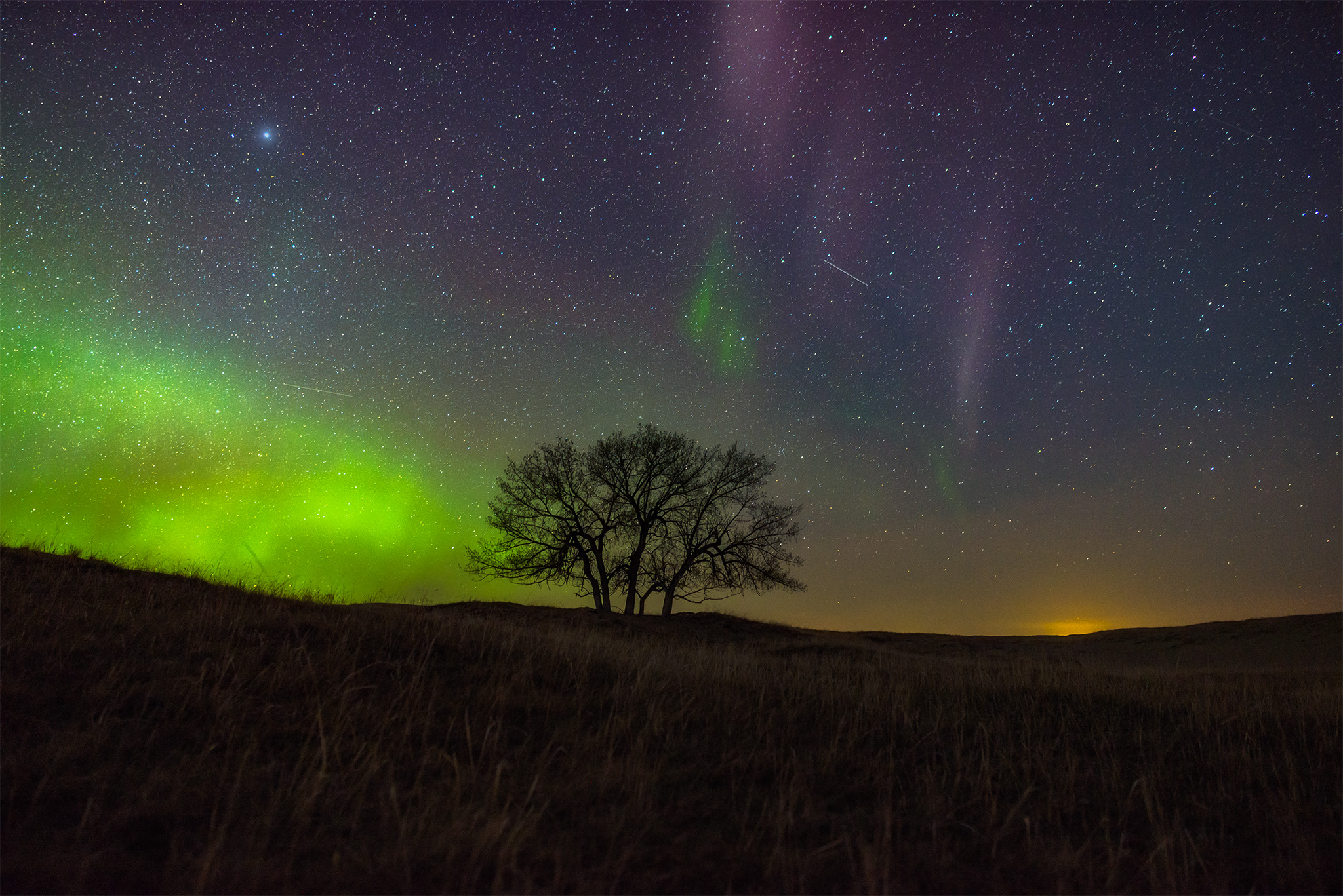
While you might think that the main draw to photographing the Great Sandhills would be the active sand dunes, I could make an argument that the greater attraction is the large cottonwood trees dotted throughout the region; these are true sentinels of the prairies. Finding lone trees of this scale is rare on the open plains, but here, they are everywhere. They offer an endless variety of foreground compositions, allowing you to frame their dark, dramatic silhouettes directly against the clean canvas of the active sand dunes, or, if you’re lucky, the Aurora Borealis.
That’s right, the Great Sandhills sit at 50.4 degrees North, plenty north enough to capture the Northern Lights behind a monster cottonwood tree (like the one that sits perfectly surrounded by active sand in the third set of dunes furthest south). While you aren't in the far north, any geomagnetic storm reaching the Kp4 to Kp5 range will send vibrant curtains of green and purple light dancing directly behind this desert landscape. Name another active sand dune complex on Earth where you can routinely photograph the northern lights. It’s okay, I'll wait.
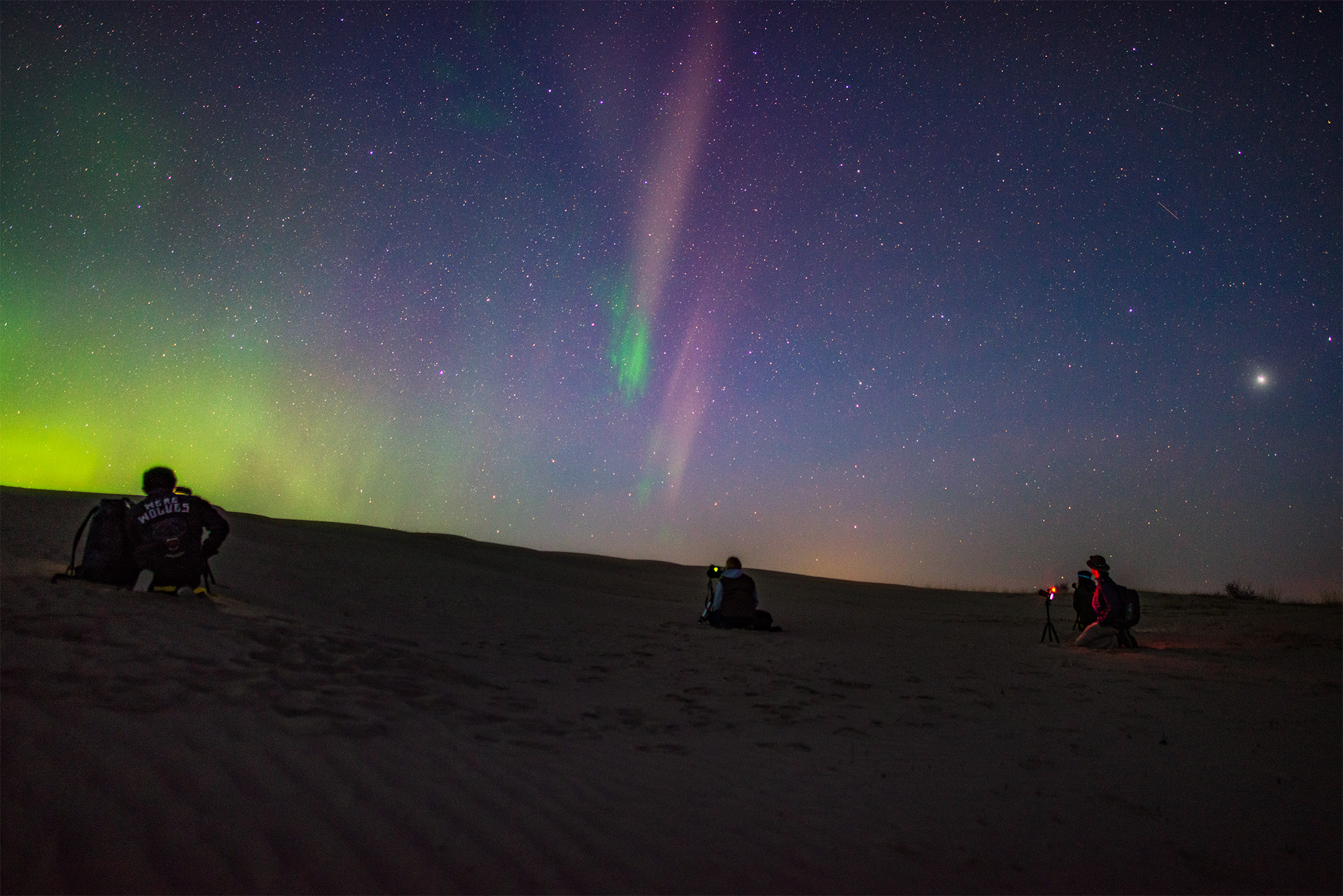
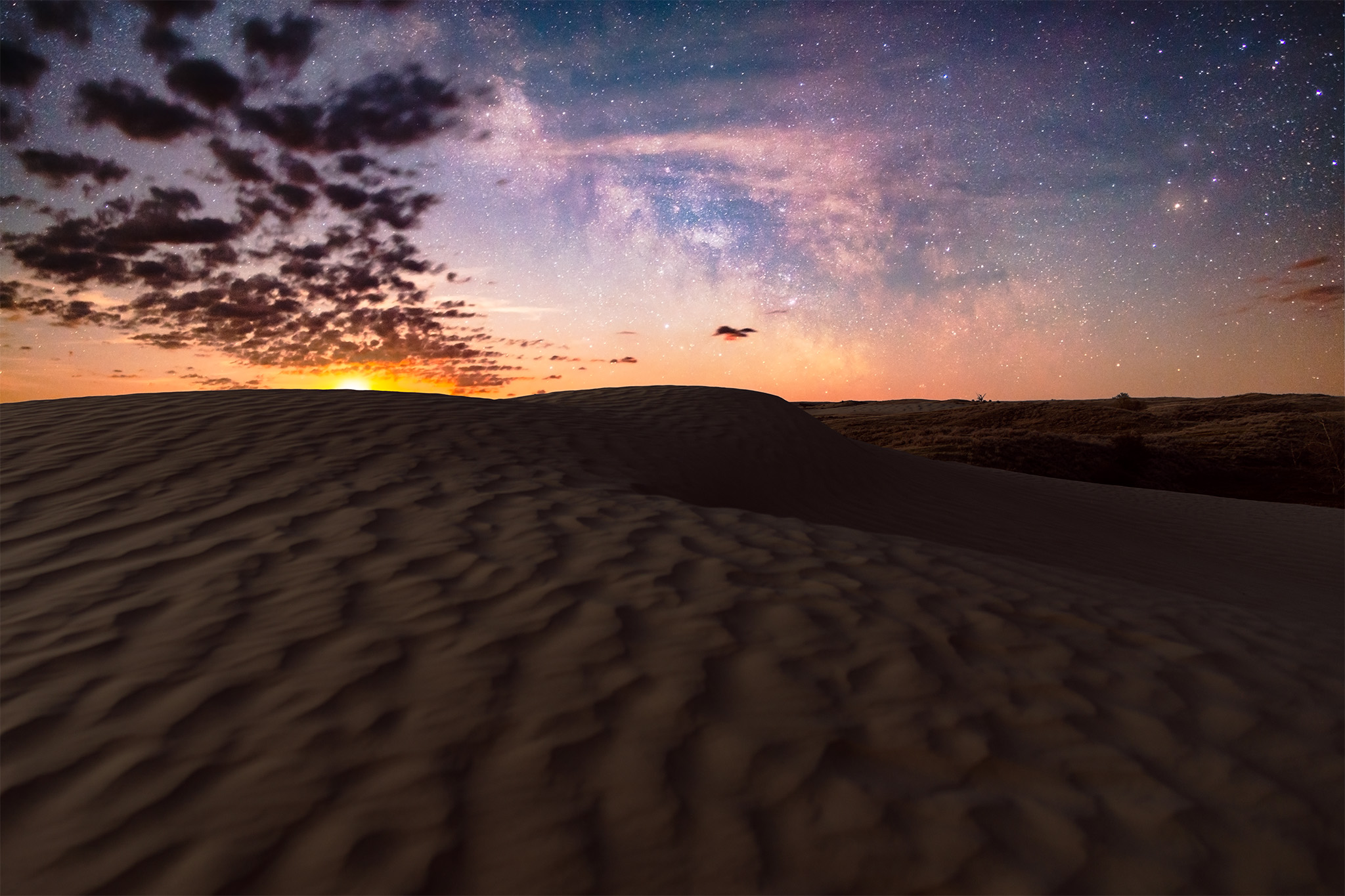
These dunes truly come to life after dark, and the magic extends far beyond the northern lights. Because of its massive footprint and the absence of neighbouring towns or cities, the Great Sandhills sits under a pristine Class 1 dark sky, the darkest rating possible on the Bortle scale. Once the sun dips below the horizon here, the darkness is absolute, making it one of the premier locations in Canada for summer Milky Way photography.
There is nothing quite like lying on your back on the cool sand during twilight, watching the prairie sky transition from a deep blue to an ink-black canvas dotted with thousands of shimmering stars.
Once true darkness hits, point your lens toward the southern horizon to capture the brilliant Milky Way. Set your camera to Manual Mode, open your aperture to its widest setting (ideally f/2.8 or faster), dial your ISO between 1600 and 3200, and choose a shutter speed of 15 seconds. Press the shutter. Congratulations, you have just captured the core of our galaxy, towering over a shifting sand dune in the middle of Canada, a deeply unique photographic experience.
If you want a deeper breakdown on mastering your exposure, nailing sharp focus in pitch darkness, or figuring out season timing, be sure to reference my comprehensive Beginner’s Guide to Night Photography before you make the trek.
The Great Sandhills offer an almost limitless canvas for the creative landscape photographer. While the dark skies are world-class and the gnarled cottonwoods provide years of compositional material, the primary draw remains the otherworldly, shape-shifting appeal of the active dunes.
Saskatchewan is notoriously windy, but you can easily turn this environmental challenge into a major creative asset. The relentless prairie wind continuously erases yesterday’s footprints, carving fresh, razor-sharp ridges and pristine ripples into the sand every single day. If you time it right during the golden hour, you can use the wind to capture incredibly moody, atmospheric images as the low-angle light illuminates the airborne grit. I have spent countless hours anchored in a single spot, simply watching the dunes reflect the shifting colour gradients of a prairie sunset. The sand goes from gold to blue and purple. Use this to create some unique imagery.
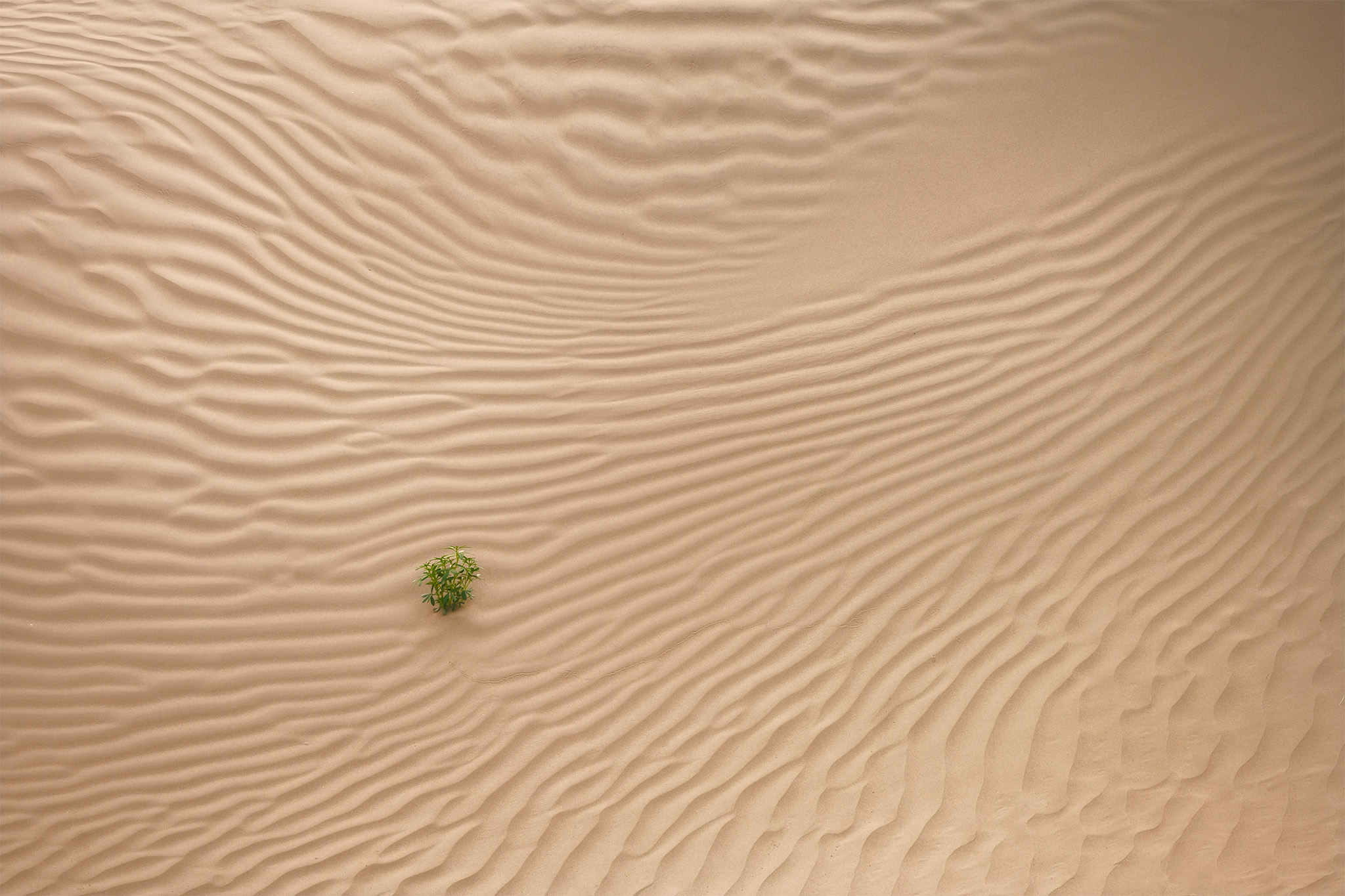
While that blowing sand is a gift for textures, it is an absolute nightmare for your camera equipment. Fine blowing sand gets everywhere. It will quickly jam twist-locks on tripod legs, grind into the delicate gears of your lens focus rings, and instantly ruin a camera sensor if it gets inside the body.
To protect your investments, follow these three rules when shooting in the dunes:
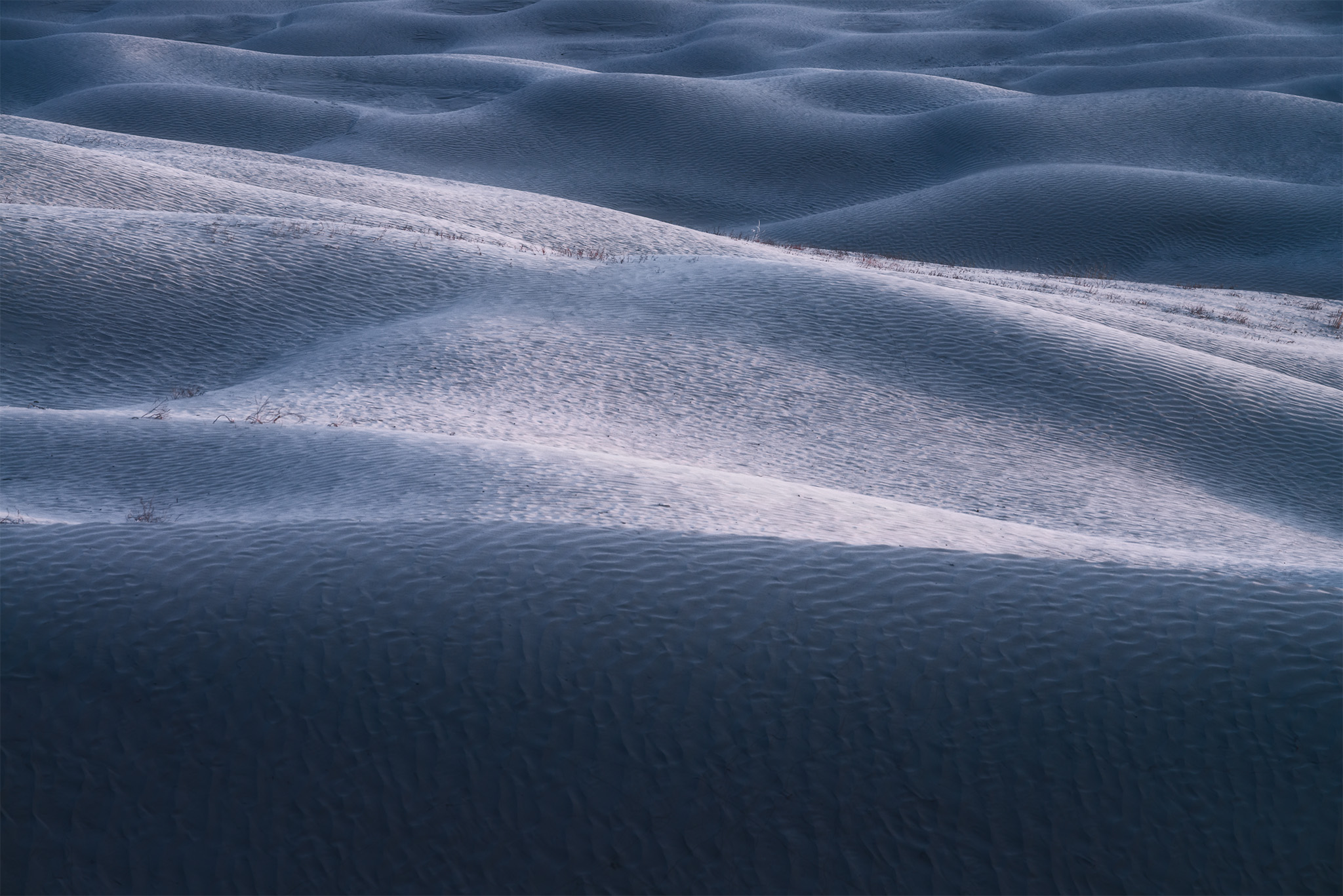
Saskatchewan is famous for its endless fields and living skies, but the Great Sandhills prove that the province holds some of the most diverse, unexpected terrain in the country. Whether you are tracking the shifting ridges during a golden hour windstorm, framing a gnarled cottonwood against a sunset, or standing in absolute silence under a Class 1 dark sky, this region is a profound reminder of the wild beauty waiting in the southwest.
Ready to explore this breathtaking desert-like landscape for yourself? Start planning your trek, check local road conditions, and find nearby accommodations by visiting the official Tourism Saskatchewan Great Sandhills Directory.

The Tourism Saskatchewan team loves sharing stories and insights about the people, places, and unexpected beauty that make this province so special. From quiet lakes and quirky roadside stops to wide-open skies and community festivals, we’re here to help you discover the heart of Saskatchewan.


