Jun 9, 2026
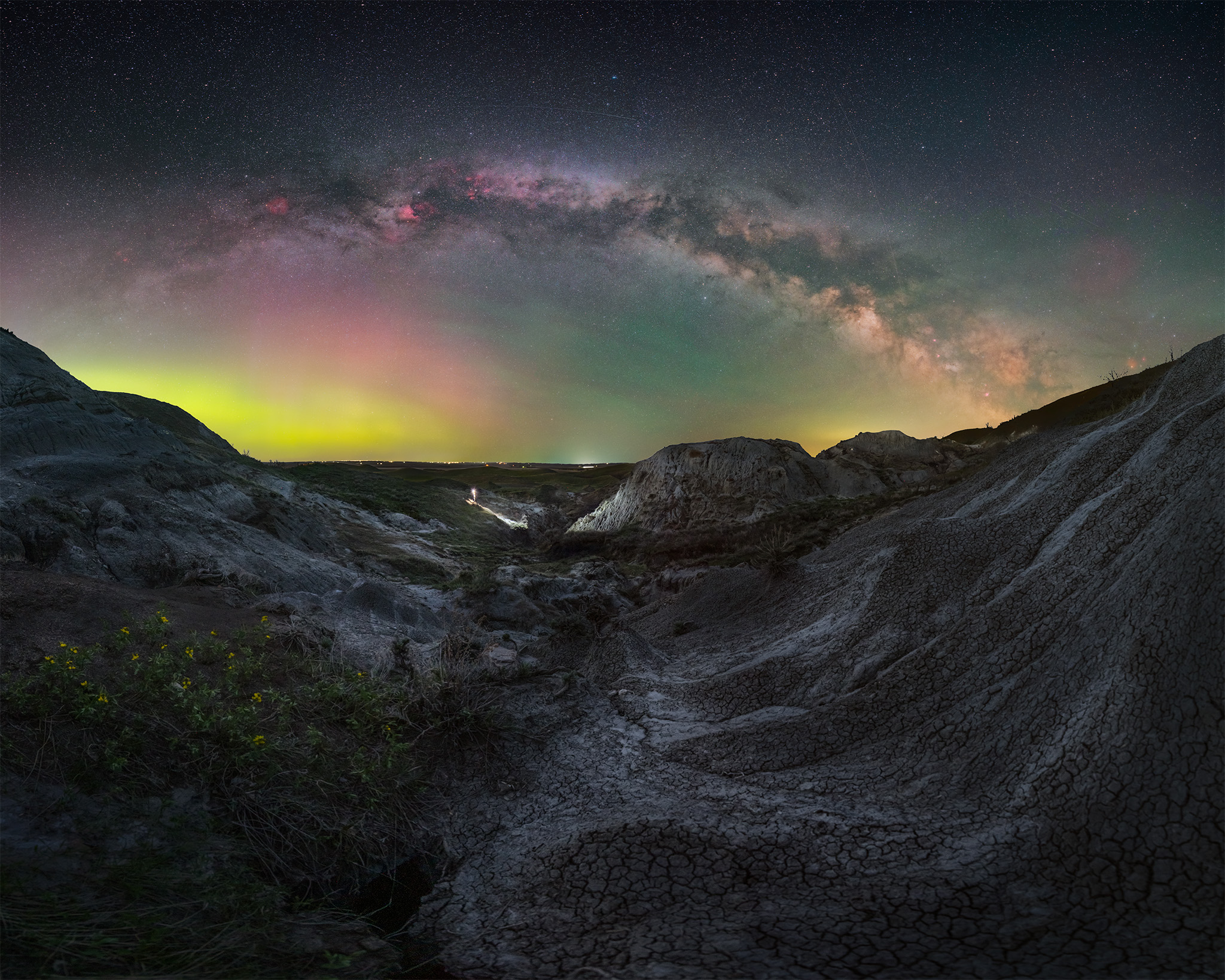
Saskatchewan is home to some of the darkest, most accessible night skies in North America. With a vast landscape and minimal light pollution, the province is a true paradise for astrophotography. Whether you want to capture the sweeping arc of the Milky Way or chase the dancing northern lights, getting started requires just a few basic tools, a bit of seasonal planning, and a reliable list of prime locations.
Photography is all about collecting light. At night, because the light from stars, nebulae, or the Aurora Borealis is so faint, your camera sensor needs a lot more time to capture it. This means you need to shoot long exposures. While many modern smartphones can capture the night sky using "Night" or "Pro" modes, a dedicated DSLR or mirrorless camera will always give you cleaner, higher-quality images.
Beyond a manual camera, you only need two other essential pieces of gear. A sturdy tripod is non-negotiable, as even minor camera movement will blur the stars during a long exposure. You also need a headlamp equipped with a red-light mode. Standard white light instantly ruins your night vision, which takes about 20 minutes to develop, whereas red light allows you to adjust camera settings safely without disruption.
As a quick-start baseline, set your camera to Manual Mode, open your lens to its widest aperture (f/2.8 or wider is ideal), set your ISO between 1600 and 3200, and try a shutter speed of 15 seconds. For a deeper dive into exposure mechanics, you can reference my complete Beginner’s Guide to Night Photography before packing your bags.
That all depends on what part of the night sky you want to include in your photograph. As you may know (Spoiler Alert!), the Earth rotates on its axis and orbits around the sun. So, throughout the year, the Saskatchewan night sky will look different.
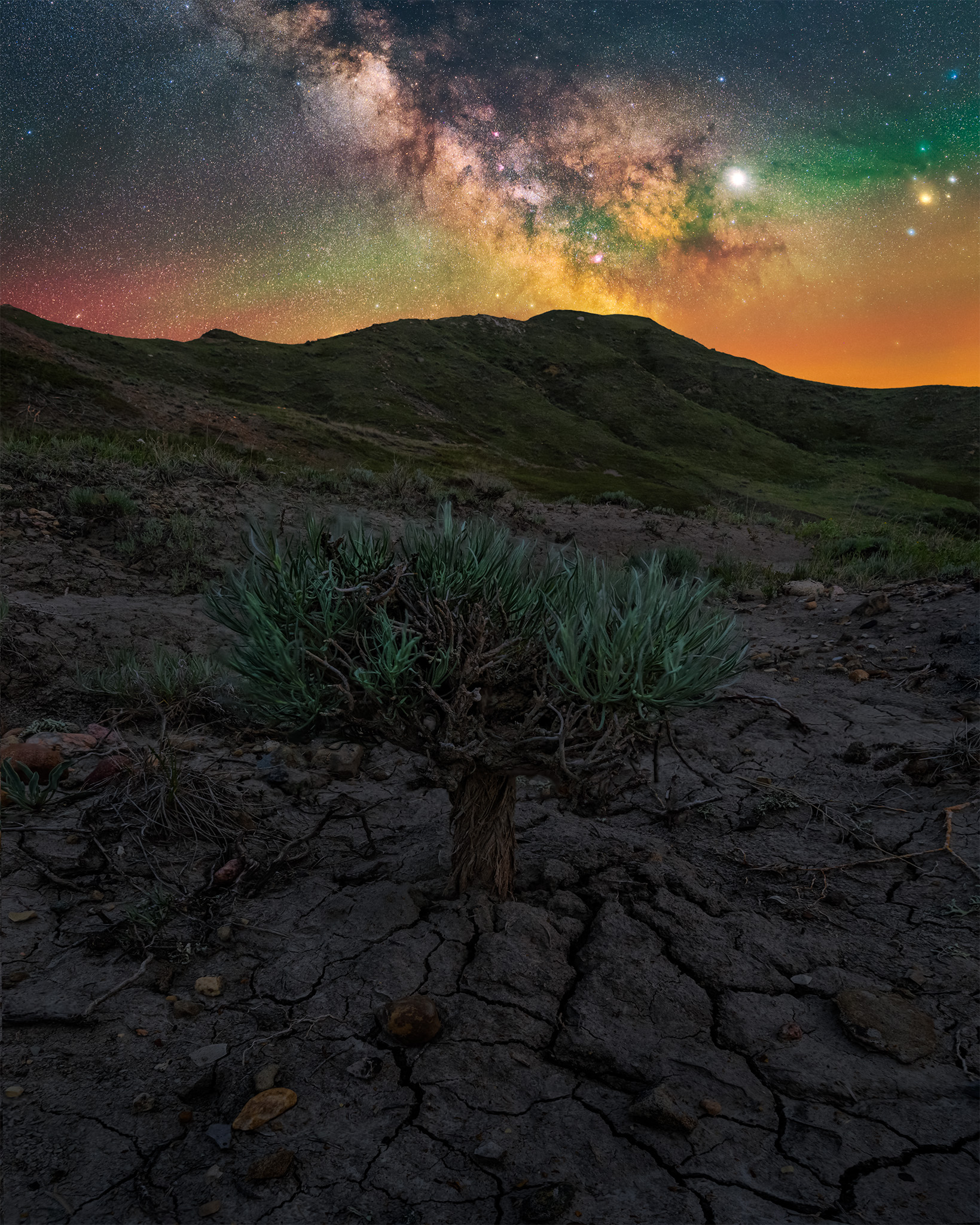
This is the brightest, most dust-filled, and most dramatic part of our galaxy: the galactic center. In April, look to the eastern sky in the early morning hours (around 2:00 AM to 3:00 AM). As summer progresses, the core tracks across the southern sky earlier and earlier each night. By September, it sets in the western sky almost immediately after twilight ends.
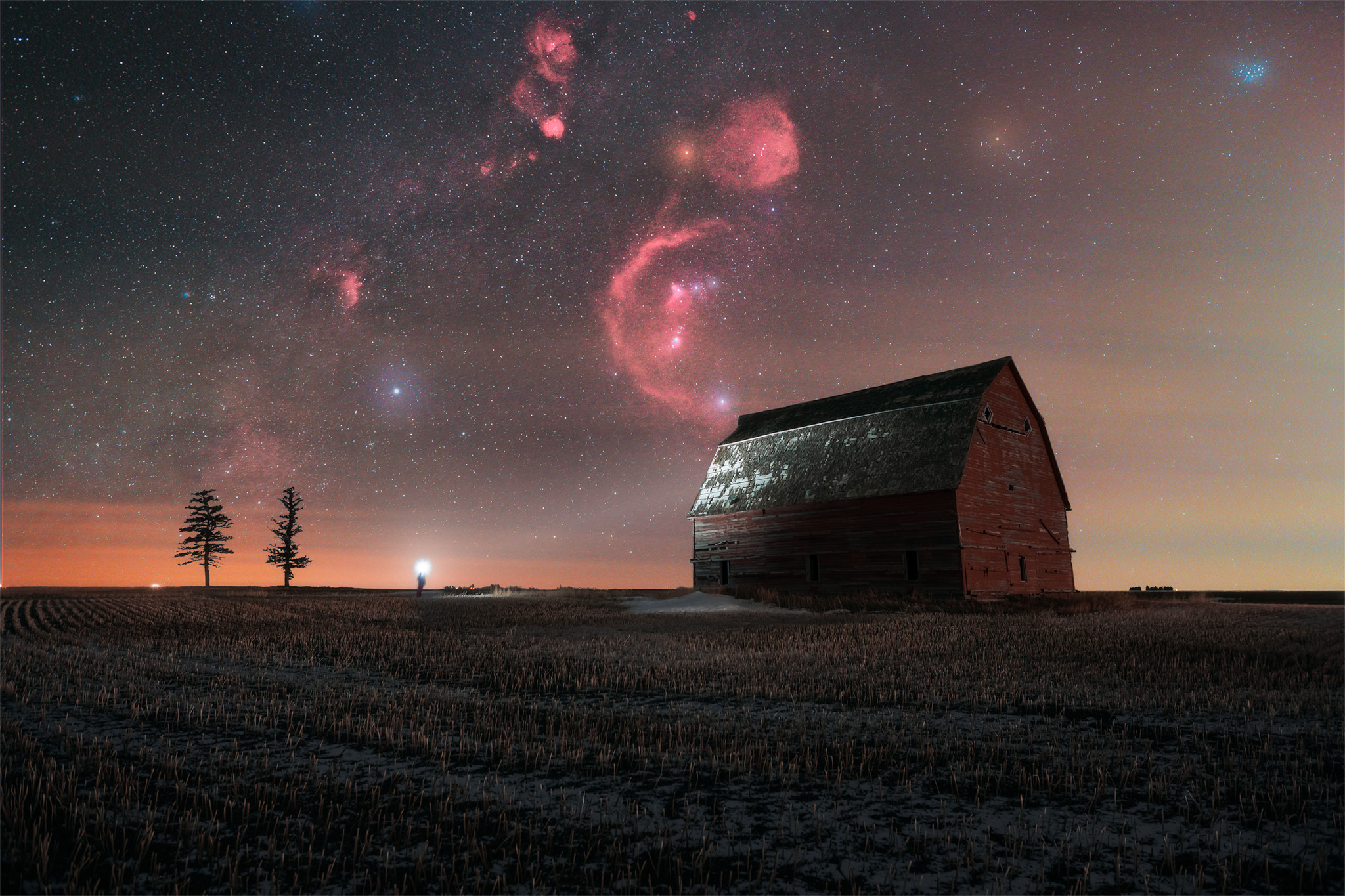
Once the summer core fades from view, the winter sky takes center stage. The winter side of the Milky Way is much more subtle and understated, but it is incredibly beautiful. It follows a similar east-to-west path across the southern sky. This season is when the iconic constellation Orion shines brightly. The vibrant reds and blues in the winter night sky match perfectly with the pristine winter Saskatchewan landscape, and it is my preferred time to practice astrophotography.
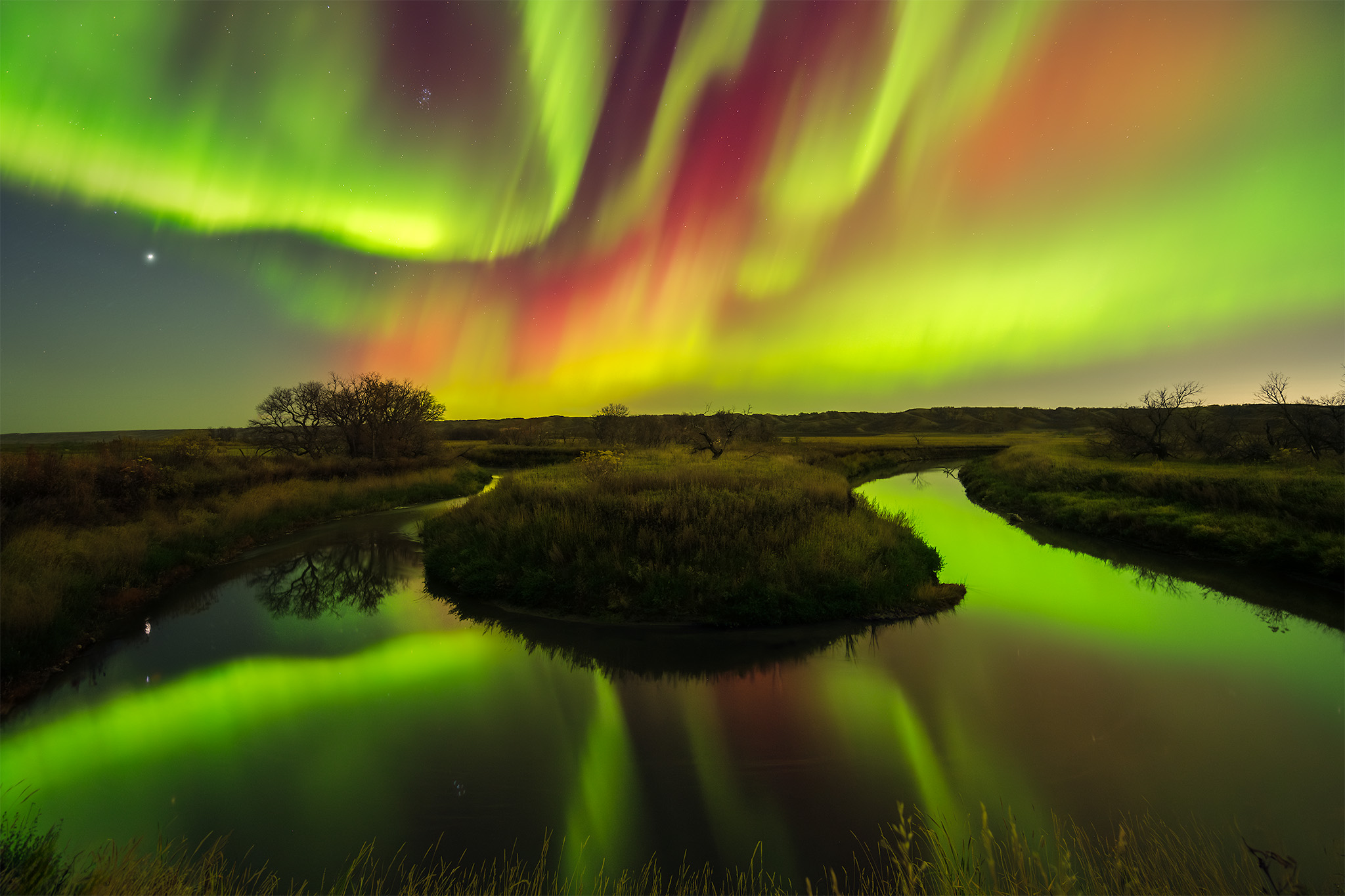
Saskatchewan’s geographic position directly under the auroral oval offers front-row seats to the northern lights. However, predicting the aurora is challenging because it is tied directly to unpredictable solar flares and geomagnetic activity.
While the aurora happens year-round, you need true darkness to see it. In central and northern Saskatchewan, the summer solstice brings near-constant twilight, making May through July a difficult window for aurora chasing. Because of this, spring and autumn are the prime seasons for northern lights photography. Winter offers long nights of deep darkness, though you must often contend with increased cloud cover and freezing temperatures.
Saskatchewan's cities are relatively small, meaning artificial light pollution drops off dramatically just past city limits. In night photography, darkness is measured on the Bortle Scale, ranging from Class 9 (bright inner-city) down to Class 1 (completely pristine darkness). The closer you travel to the US border or into the far north, the darker the skies become.
The southern edge of Saskatchewan boasts some of the most pristine Class 1 dark skies in North America.
Much of Saskatchewan’s population lives along the Highway 1 and 16 corridors in and around Saskatoon, Regina, Moose Jaw, and Swift Current. Fortunately, you don’t have to drive far from the city lights to find exceptional darkness.
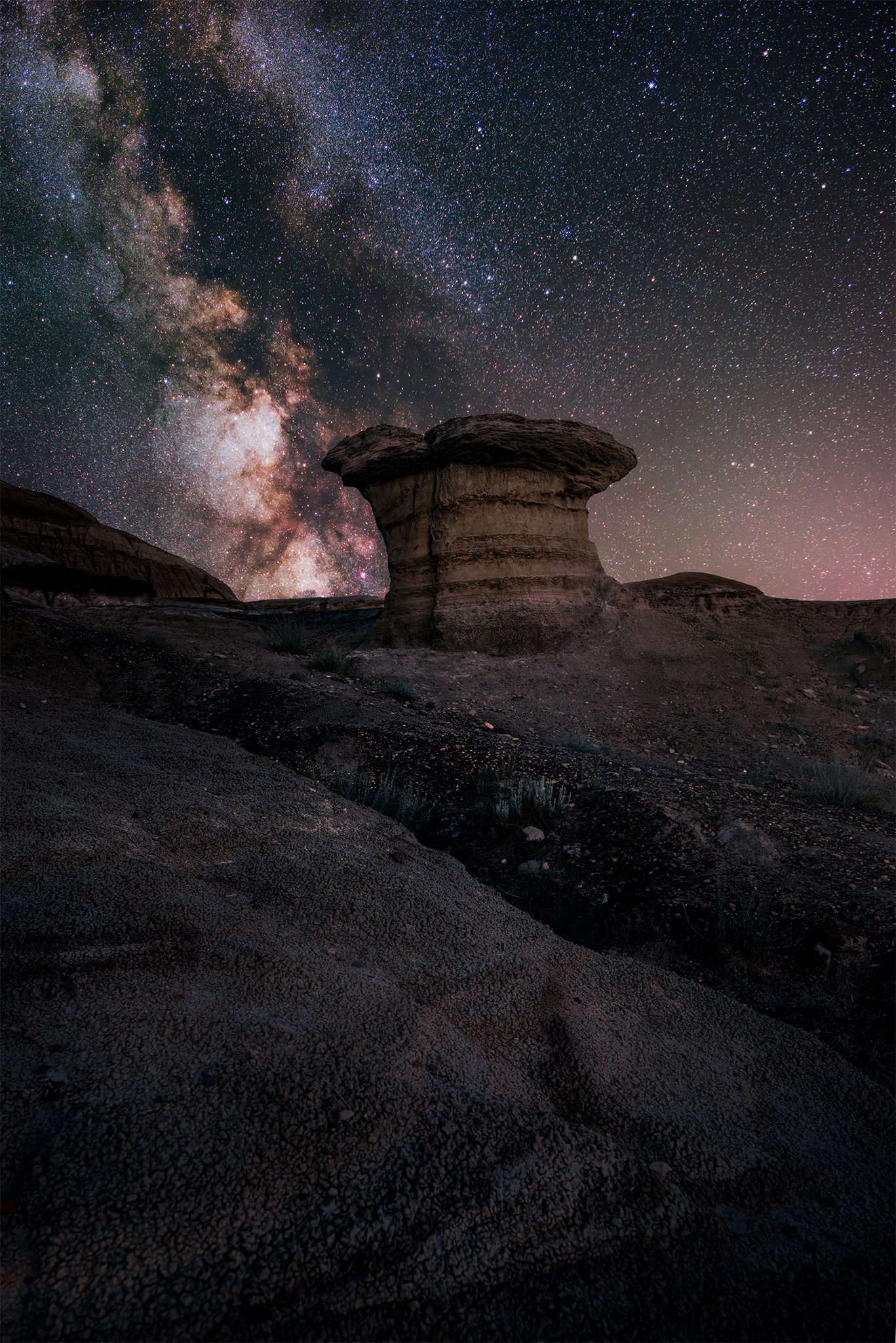
Because of their northern latitude, cities like Prince Albert and Saskatoon experience extended twilight during the summer months, making summer Milky Way photography a challenge. However, once autumn arrives, these northern locations become the envy of the Saskatchewan astrophotography community.
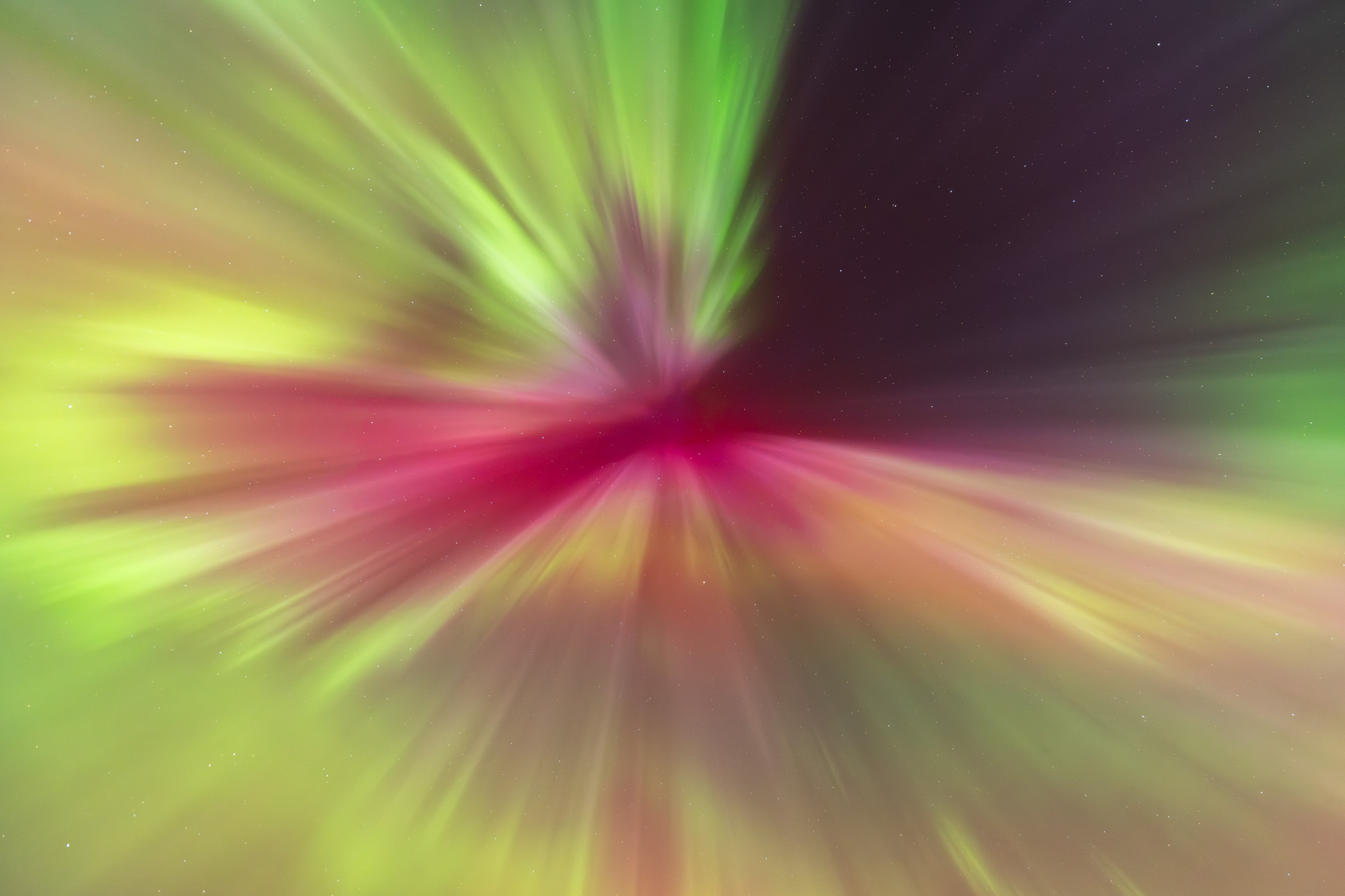
Standing under a pristine Saskatchewan night sky is a deeply grounding experience. While night photography relies on technical planning, preserving the environment you are shooting in is just as important.
Always protect your night vision by using a red-light headlamp around other photographers. Practice strict Leave No Trace principles by sticking to designated trails or durable surfaces; navigating fragile sand dunes, badlands, or native prairie in pitch darkness can easily cause severe soil erosion and crush delicate native wildflowers. Finally, always scout your compositions and ground conditions during daylight hours so you can navigate safely once the sun goes down.
Ready to pack your camera bag? Start mapping out your route and checking park boundaries by visiting the official Tourism Saskatchewan Interactive Map.
 Scott Aspinall is a Saskatchewan-based landscape photographer specializing in severe weather and deep-sky astrophotography.
Known for capturing the raw, dramatic beauty of the Canadian Prairies, Scott helps travellers experience the "Land of Living Skies" through his technical guides, field workshops, and fine art photography at Scott Aspinall Photography.
Tags


